
Delaying the Introduction of Smartphones
Are Smartphones Safe or Even Helpful for Most Children?
At best smartphones are a distraction - at school, at home, at dinner, before bedtime, all night long, upon waking and almost all other times. At worst they put a child at risk for being groomed by child predators, exposed to sexual exploitation, online bullying, body dysmorphia and many forms of deviant content. Social media has been linked to anxiety, depression and even increased suicide risk among youth. And smartphones represent a significant amount of the time young people spend on screens today.
No. So why do about 30% of 8 year old children have their own smartphone and 95% of all teens have access to a smartphone in the United States? Why do only about 50% of parents have any type of parental controls on their child’s devices?
Because parents have been lulled into believing it is all ok. That is changing.
In 2023, the US Surgeon General presented a chilling advisory on “Social Media and Youth Mental Health”. Researchers and authors such as Jean Twenge and Jonathan Haidt have been publishing their work and sounding the alarm. Research organizations such as Children and Screens, Center for Online Safety, Healthy Screen Habits and grassroots organizations such as Wait Until 8th and Screenagers are recommending delaying the introduction of smartphones and social media until high school and providing tools to help educators and parents organize support at the school level. As of 2026, “over 25 U.S. states have enacted laws, executive orders, or guidance restricting student smartphone use in schools, often adopting "bell-to-bell" bans for the entire school day” (Google 2026).
There has been some counter arguments to the narrative of delaying children’s smartphones use (Stanford Medical, 2022) with some claiming the genie is out of the bottle and can’t be put back. Check out putgenieback.org for encouragement that not only can the genie be put back, but for the sake of our children, he must be put back!
Adults themselves struggle with excess smartphone screen time. Why would they want this for their children?
At What Age Should I Give My Child a Smartphone?
This is a very common question. There is a growing consensus that not before 9th grade and that since every child is unique, parents have to choose the time based on their sense of their child’s readiness. While there are new state laws restricting social media use for minors without parental consent and age verification, these laws are facing challenges on both technical and free speech grounds. One thing is clear: Parents must continue to take responsibility for keeping their children safe.
But How Do We Say No?
Because so many children much younger than a 9th grader have their own smartphone, this presents a challenge for parents. Or even harder, how do we take a smartphone away until they are older? Organizations such as Wait Until 8th (now clarified to after 8th grade) provide tools to help parents navigate this struggle.
Here are some pointers we recommend to help parents say no:
1. Accept responsibility as a parent to make decisions that the child will not like.
2. Understand that this decision is in the best interest of the child and they will likely not realize it until well into adulthood.
3. Provide solutions, where possible, to the difficulties they will face as a result.
4. Help the child accept difficulties where solutions are not possible.
5. Join the Wait Until 8th movement at your child’s school or start one and enlist parents to join.
Why Do Parents Think Their Child Needs a Smartphone?
1. To keep my child safe in the event of a school shooting.
Answer: A smartphone will not help. Schools are going to be banning them during school hours soon anyway.
2. To keep my child safe when they are away from home so they can call 911 or me.
Answer: Flip phones, phone watches and child safe restricted smartphones (Bark, Gabb) can be used instead.
3. I want to know where they are when they go out.
Answer: Same answer as 2
4. I need to be able to reach them at any time when they are away from the house, even at school. Answer: Is this really important? If so, then same answer as 2.
5. I want them to learn about new technologies like Social Media and AI for their future.
Answer: Smartphones are not the best solution. Careful guidance and parental supervision is necessary to keep children safe and productive as they learn to navigate new technologies. The Sentinel LaunchPad can be used, together with the child, to introduce new technologies in a simple, safe and highly supervised manner.
Why Do Children Think They Needs a Smartphone?
1. To fit in. All the other kids have smartphones.
Answer: Yes many do, but soon they will not be allowed during school hours. Smartphones are not safe for children. If is really just to not look like a “loser”, get them a Bark, Gabb or similar kid-safe phone.
2. To be able to talk to my friends and classmates on social media. To not feel left out.
Answer: This can be done on the Sentinel LaunchPad computer with restrictions and supervision. This will actually help the child develop emotional regulation skills (to counter FOMO) as they will not be able to be on Social Media 100% of the time as with smartphones (and notifications).
3. To be able to check in with parents, get picked up at a certain location or time.
Answer: Flip phones, phone watches and child safe restricted smartphones (Bark, Gabb) can be provided to them instead.
4. To complete or turn in school assignments?
Answer: If the phone is needed simply for the camera, get them a portable digital camera. If it is to take pictures of written assignments to submit, get them a low cost Document Camera/Webcam for the Sentinel. If they need it for a specific App, verify this with the teacher.
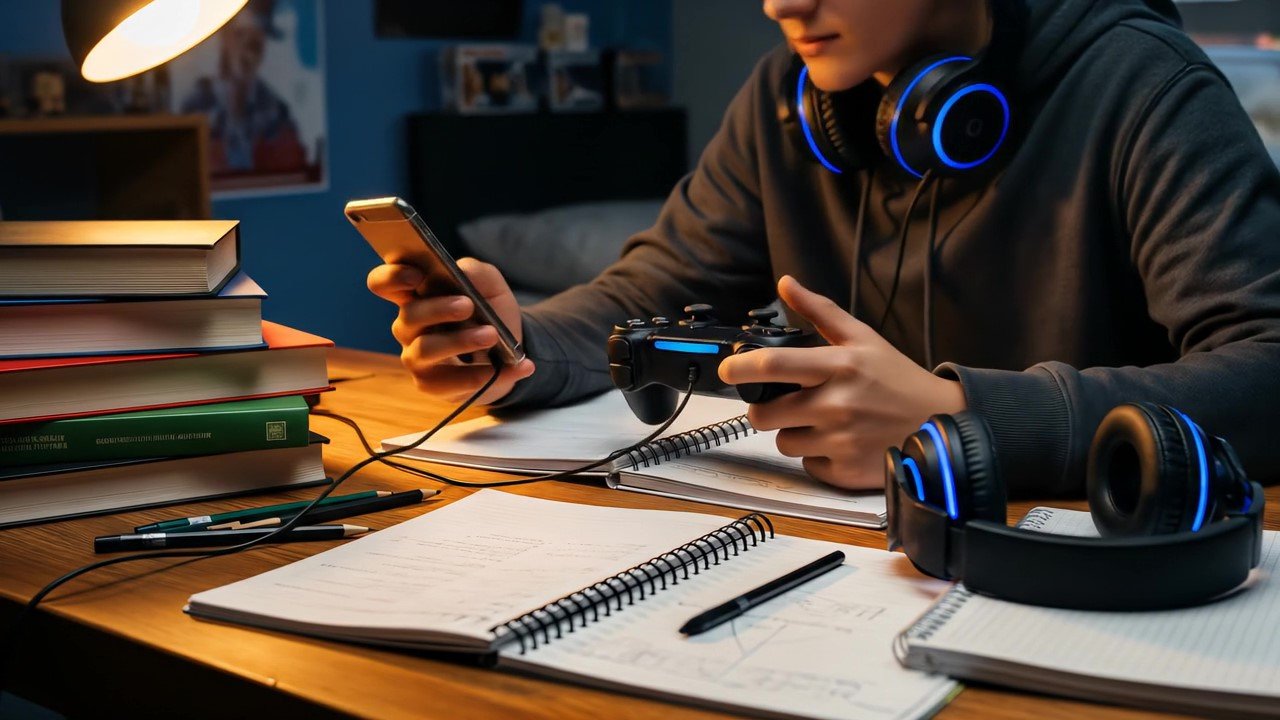
“Multitasking” is neither efficient nor helpful in any way. Excess time spent completing homework and studies can reduce available time for exercise, sleep and outside play.

US Surgeon General 2023 Advisory on Social Media and Youth Mental Health outlined the significant negative impact of social media on the mental health of children. 95% of youth ages 13–17 report using social media, 1/3 use “constantly” and 40% of children ages 8–12 use social media although not technically allowed until age 13.

PutGenieBack.org is a resource directory sponsored by Sentinel Computers with information on a number of areas, including Social Media where children need to be protected from the unbridled acceptance of new technologies.